
You cranked the ring until it squeaked and called the jar sealed. The dome underneath was already bent from the last time you pried it off. The band felt tight. The gasket was not sitting on the rim.
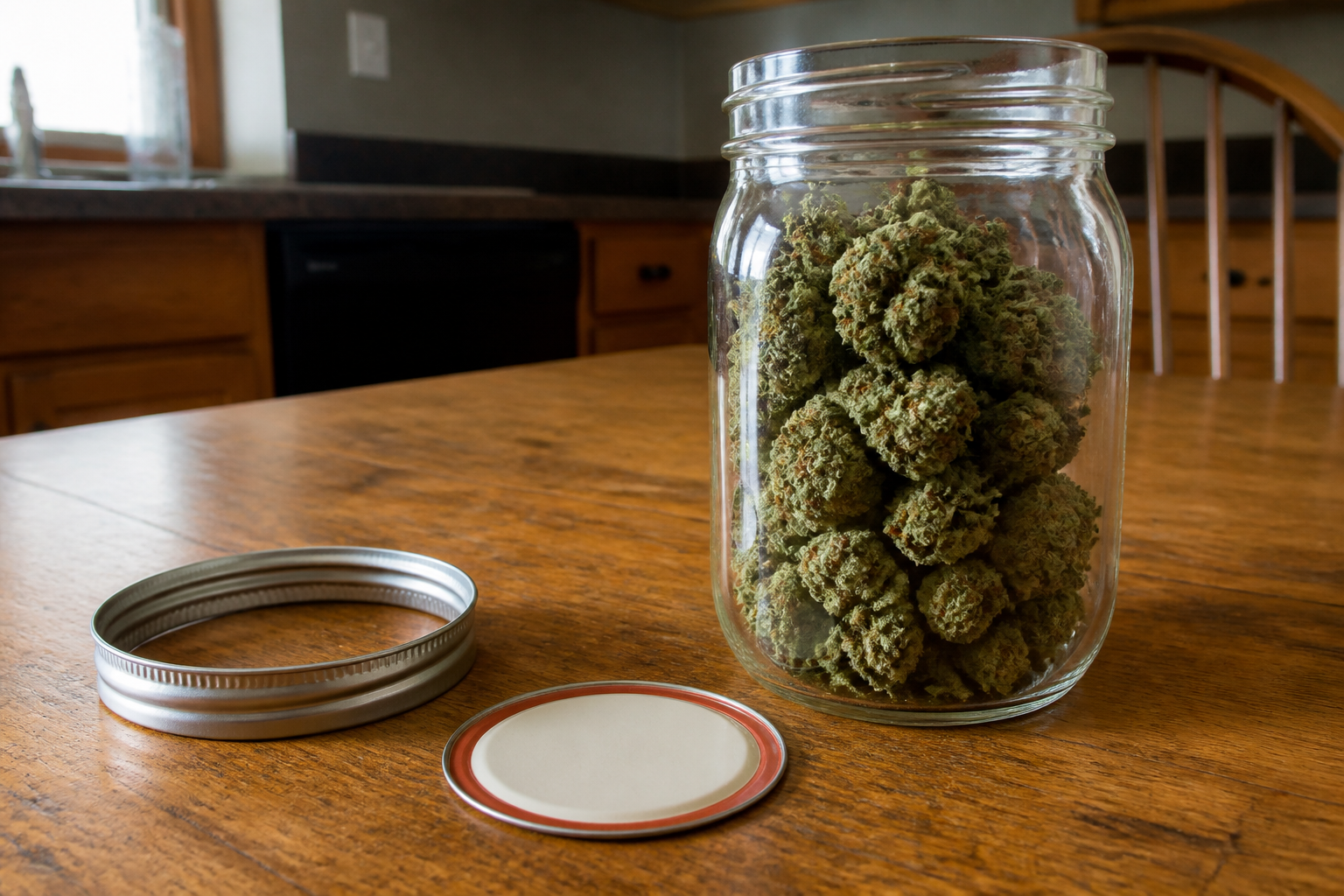
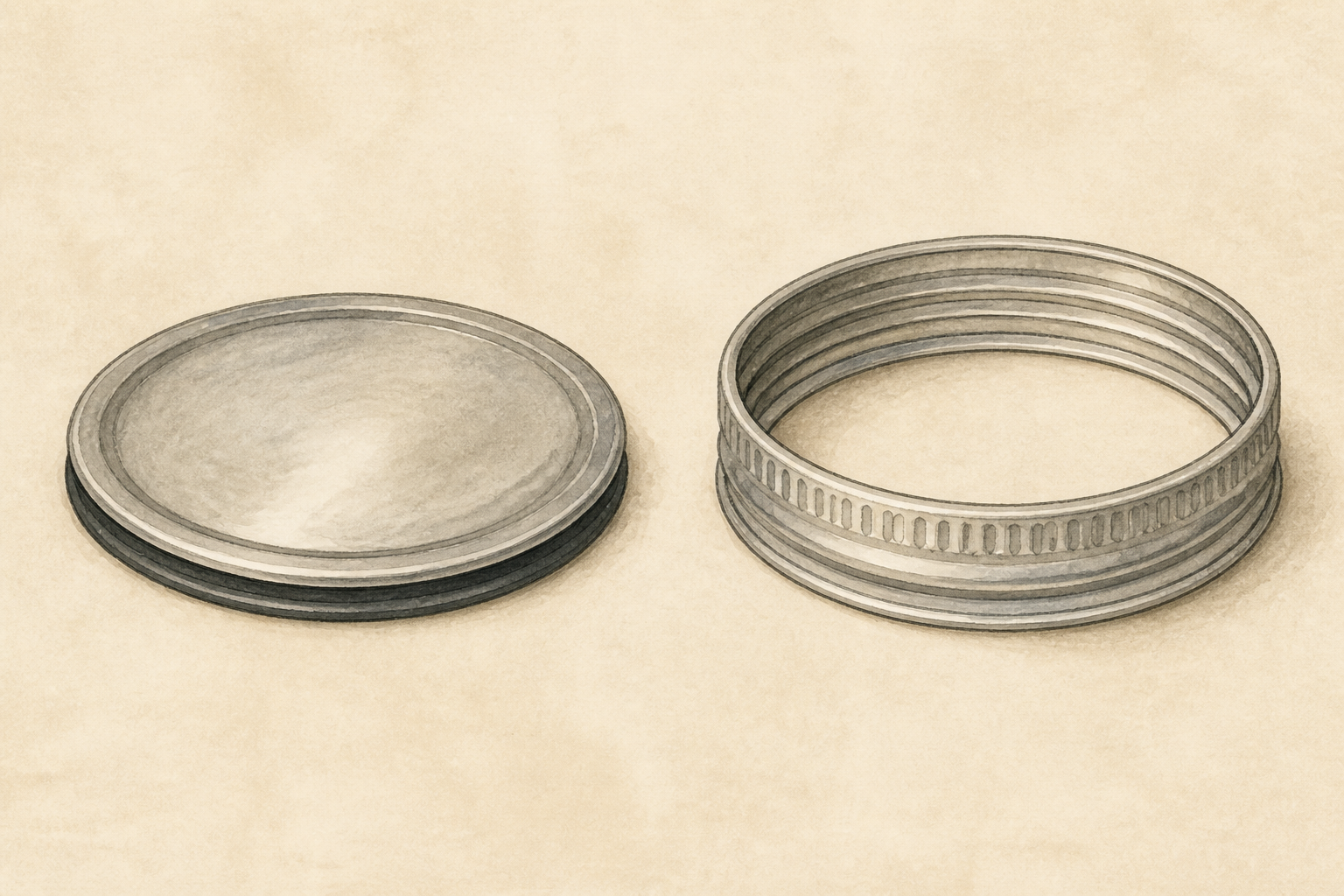
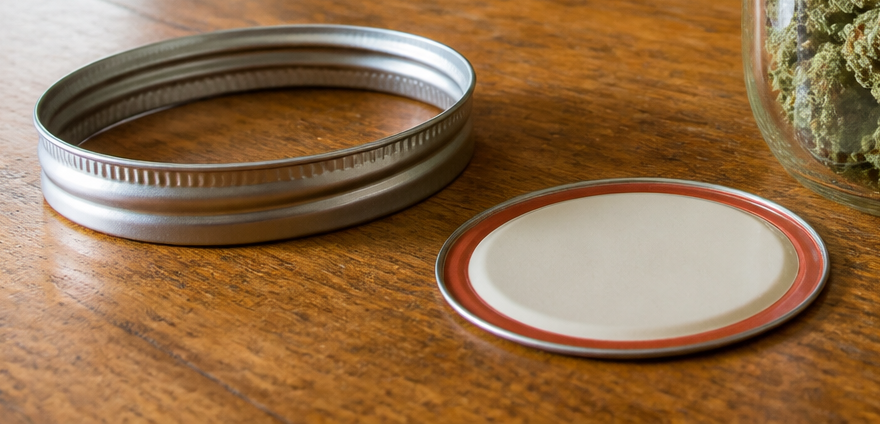
Chapter 1 was what leaves when you open any lid. This is the hardware that is supposed to stay closed. A two-piece mason lid is a flat dome with a gasket, held by a metal band. The seal lives on the dome. The ring only holds it there.
Seat a good dome on a clean rim. If the flat is warped, replace the flat.
The jar is a still was the lid-crack. This chapter is the two pieces.
How to keep the jar closed
Wipe the rim. Set the flat lid gasket-down. Screw the band on so the dome cannot wander. If the flat is dented, rusty, or the gasket is chewed, throw that flat out and use a new one. A tight ring on a bad dome is still a bad seal.
This is not a canning lesson. Nobody is putting the jar in a pot. The band does not become a gasket because you lean on it.
They did not trial your ring
I did not find a paper that put the same flower under a sound two-piece lid and a warped one and published the nose. So I am not hanging a leak percent on your band. The keep is still the keep.
The people who wrote down this hardware were writing about home canning. The USDA / National Center for Home Food Preservation guide says the two-piece lid is a flat metal lid held by a screw band, and the seal is a gasket compound in a trough on that flat lid (NCHFP, Complete Guide to Home Canning, Guide 1, rev. 2015, https://nchfp.uga.edu/papers/guide/GUIDE01_HomeCan_rev0715.pdf). North Dakota State says the same thing in shorter form: the compound is on the lid, traditional flats are meant for one canning use, and opening warps them (Garden-Robinson, NDSU FN2028, May 2022).
That is food in a canner. I am not copying their process, their vacuum, or their "fingertip tight so steam vents" onto your stash. I am taking one fact: the gasket is on the dome. The band is a clamp.
I am not writing a mason-lid trial. This is practice, not a trial of the ring.
This is 21+ educational writing with no medical claims. It is about how you keep the flower.
Sources
- National Center for Home Food Preservation / USDA. Complete Guide to Home Canning, Guide 1: Principles of Home Canning. Rev. 2015. Two-piece lid: flat lid with gasket compound, held by a screw band. Canning process, not flower. https://nchfp.uga.edu/papers/guide/GUIDE01_HomeCan_rev0715.pdf
- Garden-Robinson J and NCFSEN. Put a Lid On It! Best Practices for Using Closures for Home-based Canning. NDSU Extension FN2028, revised May 2022. Flats one-use in canning; compound degrades; bands reuse. Not flower. https://www.ndsu.edu/agriculture/extension/publications/put-lid-it-best-practices-using-closures-home-based-canning
Flagged / not used as numbers: any leak percent (none found); hanging canning vacuum or steam-vent torque on a dry jar; treating the band as the gasket; rewriting Chapter 1 as this chapter; Ch11 fill.
Series note
This is chapter 15 of a CincyCannaDash quality library. The seal lives on the dome. Next is not locked.
The live board is today's menu. Dated lab reports sit next to the lots, and areas lists the Southern Ohio towns we already serve. 21+. (513) 986-5438.
More notes
- The tape is the memory
- The working jar is the small one
- The bag is not a jar
- The empty jar is a bigger still
- The grind is the last harvest
- Two OGs, same family
- The fridge is a wet box
- Light is the faster insult
- The dash is a kiln
- The pack is not a cure
- The freezer is not a time machine
- Amber is senescence
- The name is not the plant
- How pick up and delivery works
- How to read a lab report
- Your cannabis jar is a still